
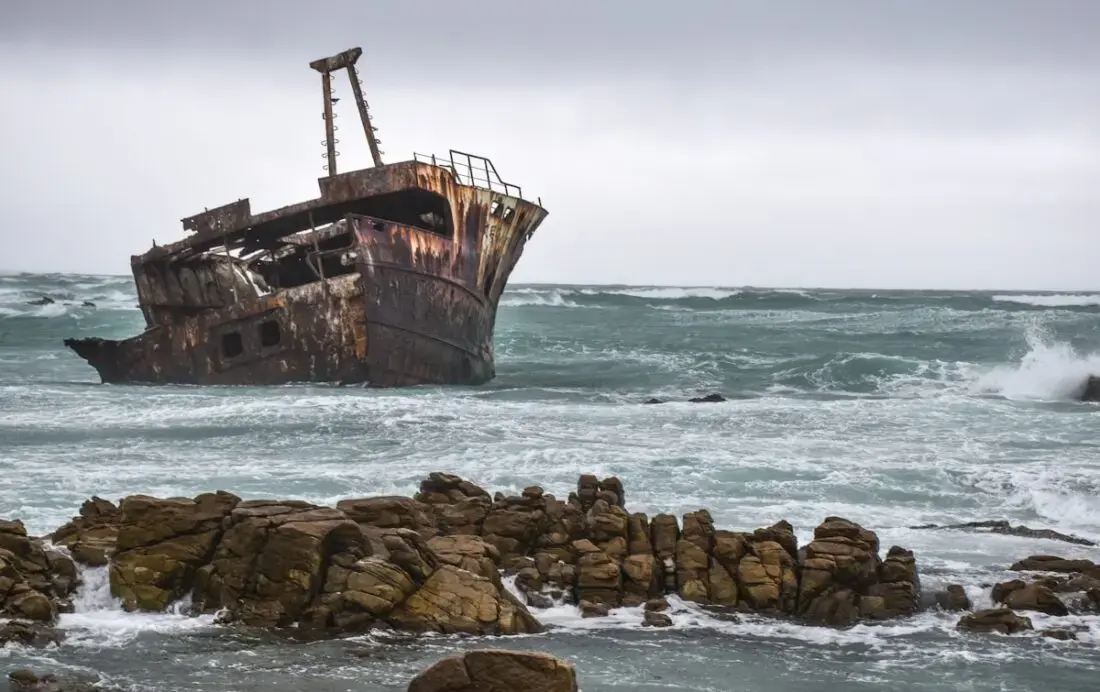
Paul’s shipwreck and the deadly snake reveal something many believers forget when trouble hits. God can give you a promise without giving you a peaceful road. Paul was heading to Rome, yet his journey included a violent storm, a wrecked ship, cold, hunger, and a venomous snake. You can read more about biblical hope in suffering when your own season feels hard.
I personally believe this story speaks directly to Christians who feel confused by suffering. Paul was doing God’s work, yet trouble still found him. That bothered me when I first considered the full picture. Then I started seeing something I had missed. —>
God’s presence does not mean the absence of storms. His presence means the storm does not get the final word.
Why Did Paul Survive the Shipwreck?
Paul survived the shipwreck because God had already promised that he would stand before Caesar. The storm was real, the danger was real, and the wreck was real. Yet God’s promise stood firm. Paul did not escape the storm, but he survived it because God still had work for him to do.
Paul was traveling as a prisoner toward Rome. Acts 27 describes a terrible storm that battered the ship for many days. The sailors eventually gave up hope of surviving. Paul, though, received a message from an angel of God.
“For there stood by me this night an angel of the God to whom I belong and whom I serve, saying, ‘Do not be afraid, Paul; you must be brought before Caesar.’” (Acts 27:23-24, KJV)
That sentence changes everything.
Paul was not promised that the ship would remain intact. He was promised that he would reach Caesar. The promise concerned Paul’s destination, not his comfort.
Here’s something I had to learn the hard way: God’s promise does not always explain the process. You may know where God is leading you while having no idea what the road will look like.
The ship eventually broke apart. Some people swam. Others held onto pieces of the vessel. Everyone reached land alive.
“And so it came to pass that they all escaped safely to land.” (Acts 27:44, ASV)
I want you to notice something. God saved the people without saving the ship.
That distinction matters.
You may lose a job, relationship, plan, possession, or opportunity and still discover that God’s purpose for your life remains. The ship was destroyed. The people survived.
That is Paul’s shipwreck in one powerful picture.
💡 God may allow the vessel to break without allowing His purpose for you to break.
Why Did the Venomous Snake Bite Paul?
Paul was bitten while gathering sticks for a fire after reaching Malta. The bite was sudden and dangerous, but it did not mean God had abandoned him. The snake became another test after the shipwreck. Paul suffered the attack, yet God prevented the expected result and used it to display His power.
Imagine the scene.
Paul had survived the sea. He had reached land. He could have expected a moment of rest.
Instead, another danger appeared.
“And when Paul had gathered a bundle of sticks and laid them on the fire, a viper came out because of the heat and fastened on his hand.” (Acts 28:3, KJV)
The Greek text uses echidna, a word associated with a viper or venomous snake. Malta had a warm Mediterranean climate, and snakes could shelter among wood and brush.
Paul was not looking for trouble. He was helping. That matters.
Sometimes trouble arrives while you are doing something ordinary and good. You can serve God, help people, pray faithfully, and still face something you never expected.
I couldn’t shake that thought.
Paul had already endured a terrifying sea journey. Now a snake attached itself to his hand. The islanders saw it and assumed Paul must be guilty of some terrible crime.
They expected him to swell or suddenly fall dead.
But Paul kept living. The people watched closely. Then they changed their minds.
“But he shook off the creature into the fire, and was not harmed.” (Acts 28:5, WEB)
The snake attacked Paul, but it did not determine Paul’s outcome.
That is the heart of Paul’s shipwreck and the deadly snake.
Why Did the Snake Venom Not Harm Paul?
The venom did not harm Paul because God had promised his safety through the journey. The protection was specific, not a general promise that believers will never suffer. Paul still endured danger, cold, hunger, fear, and loss. God protected his life because Paul’s mission was not finished, even after the wreck.
The crowd expected death.
Paul experienced no deadly effect.
This reminds us of something Jesus had said earlier about His disciples:
“They shall take up serpents; and if they drink any deadly thing, it shall in no wise hurt them; they shall lay hands on the sick, and they shall recover.” (Mark 16:18, KJV)
Paul’s experience closely resembles this statement. Yet I want to draw your attention to something important.
This passage does not give Christians permission to test God.
Paul did not grab a snake to prove his faith. He did not drink poison to demonstrate spiritual power. The snake attacked him unexpectedly while he was serving others.
That difference matters.
Faith does not create reckless situations.
Paul’s protection was also connected with God’s larger purpose. Christ had told Paul that he would testify in Rome.
“For as you testified concerning me at Jerusalem, so you must testify also at Rome.” (Acts 23:11, ASV)
There was still work ahead.
I see something many people miss here. Paul was protected for a purpose, not protected from every form of suffering.
He had already suffered greatly.
He had been beaten. He had been imprisoned. He had faced storms. He had endured uncertainty. Yet God kept him alive.
What Did Paul’s Shipwreck Teach Believers?
Paul’s shipwreck teaches believers that God can keep His purpose alive inside terrible circumstances. You may lose possessions, comfort, plans, or control without losing God’s promise. Paul reached Malta as a survivor, not because the storm was gentle, but because God remained faithful through every violent turn of the journey.
This is where Paul’s shipwreck becomes personal.
You may be facing your own storm right now. Maybe the situation has lasted longer than expected. Maybe you prayed for calm, but the waves kept rising.
Paul’s story gives you a hard truth.
Being faithful does not make you immune to suffering.
The Bible never teaches that faithful Christians will have easy lives.
Paul himself wrote about suffering many times. He understood pain from experience.
“We are hard pressed on every side, yet not crushed; we are perplexed, but not to despair.” (Second Corinthians 4:8, KJV)
That is different from pretending everything is fine.
- Paul was perplexed.
- Paul was pressured.
- Paul was attacked.
- Yet he was not destroyed.
Here’s what surprised me about Paul’s shipwreck and the deadly snake. The miracle came after the storm, but another threat appeared immediately.
The wreck ended. The snake appeared. The snake disappeared.
Then Paul became involved in healing people on Malta.
“It happened, that the father of Publius lay sick with fever and dysentery. Paul entered in, prayed, and laid his hands on him, and healed him.” (Acts 28:8, WEB)
Paul’s suffering did not cancel his ministry.
It became part of the road God used.
You may think your painful season has made you useless. It has not. God can still use you while you are recovering, rebuilding, waiting, or walking through uncertainty.
Your broken season does not automatically mean your calling is broken.
Does Paul’s Shipwreck Prove God Protects Us?
Paul’s shipwreck does not prove that Christians will never face disaster. It proves something stronger and more biblical: God remains sovereign when disaster comes. Paul was not promised an easy trip. He was promised survival for a purpose. Your faith rests in God’s character, not in a life free from storms, pain, or danger.
This point needs to stay clear. God protected Paul. But Paul still suffered.
The Bible does not teach that every Christian will escape every accident, illness, attack, or disaster. Paul’s story cannot be turned into a guarantee that nothing bad will happen to you.
I personally believe that distinction protects us from shallow faith.
You can trust God without demanding a trouble-free life.
You can pray for protection without testing God.
You can believe for a miracle while accepting that God’s wisdom is higher than your understanding.
Come to think of it, Paul’s journey shows a remarkable pattern.
The storm could not stop him.
The shipwreck could not stop him.
The cold could not stop him.
The snake could not stop him.
God’s purpose continued.
That does not mean Paul was superhuman. It means God remained faithful.
The island of Malta became part of his testimony. Paul arrived there as a prisoner and survivor. He left after ministering to people who had witnessed God’s power.
That is something special.
The Deeper Meaning Behind Paul’s Survival
Paul’s shipwreck and the deadly snake show the difference between divine protection and a comfortable life. Divine protection means God remains Lord over your calling, even when circumstances become frightening. Comfort says nothing should hurt. Faith says God remains trustworthy when something does hurt.
The word providence helps describe this idea. Christian theology uses providence to speak about God’s ongoing care and rule over creation and human history.
Paul’s story gives us a living picture of that truth.
God did not stop the wind.
God did not prevent the ship from breaking.
God did not remove the snake before it appeared.
Yet God controlled the final outcome.
You know what I realized?
Sometimes you are asking God to remove the storm when God is showing you that the storm cannot remove Him.
That does not make suffering pleasant.
It makes suffering different.
You can cry and still trust God.
You can feel afraid and still obey God.
You can lose something precious and still believe God has not lost control.
“Cast all your anxiety on him, because he cares for you.” (First Peter 5:7, WEB)
The people on Malta watched Paul closely.
They expected death.
Instead, they saw life.
I want you to hear this: people may be watching how you respond to suffering.
Your calm may preach.
Your endurance may preach.
Your continued faith may preach.
You do not need to pretend that pain does not hurt. Paul never teaches that.
He teaches something better.
Pain does not have to become your master.
What Should Christians Learn From Paul’s Story?
The central lesson is simple. Trust God’s promise, obey His direction, reject reckless testing, and keep serving even when your circumstances change suddenly. Paul’s shipwreck and the deadly snake show that suffering can interrupt your plans without canceling God’s purpose.
Here’s the bottom line.
Paul did not survive because he was lucky.
He survived because God had a purpose for his life.
The shipwreck was real.
The snake was real.
The danger was real.
So was God’s faithfulness.
I see a lesson here that reaches far beyond Malta. You may be in a season where everything feels unstable. Your plans may have fallen apart. Your confidence may have taken a beating.
Don’t confuse a broken plan with a broken promise.
Paul’s shipwreck and the deadly snake remind you that God’s purpose can survive circumstances you thought would destroy everything.
Mark my words: the storm does not get to write the final chapter.
You may not know what happens next.
Paul didn’t either.
Yet he kept moving.
That is faith.
And that is where the story comes full circle. The man who survived the sea and the snake continued his ministry because his journey was still unfinished.
I want you to think about that today.
If you are facing your own storm, do not surrender your faith because the ship is breaking. Keep your eyes on God. Keep obeying Him. Keep serving where you can.
Then bring your honest thoughts into the conversation. What part of Paul’s shipwreck and the deadly snake speaks most strongly to what you are facing right now? Leave your raw thoughts in the comments.
You can also find more encouragement through our hope and healing section.