
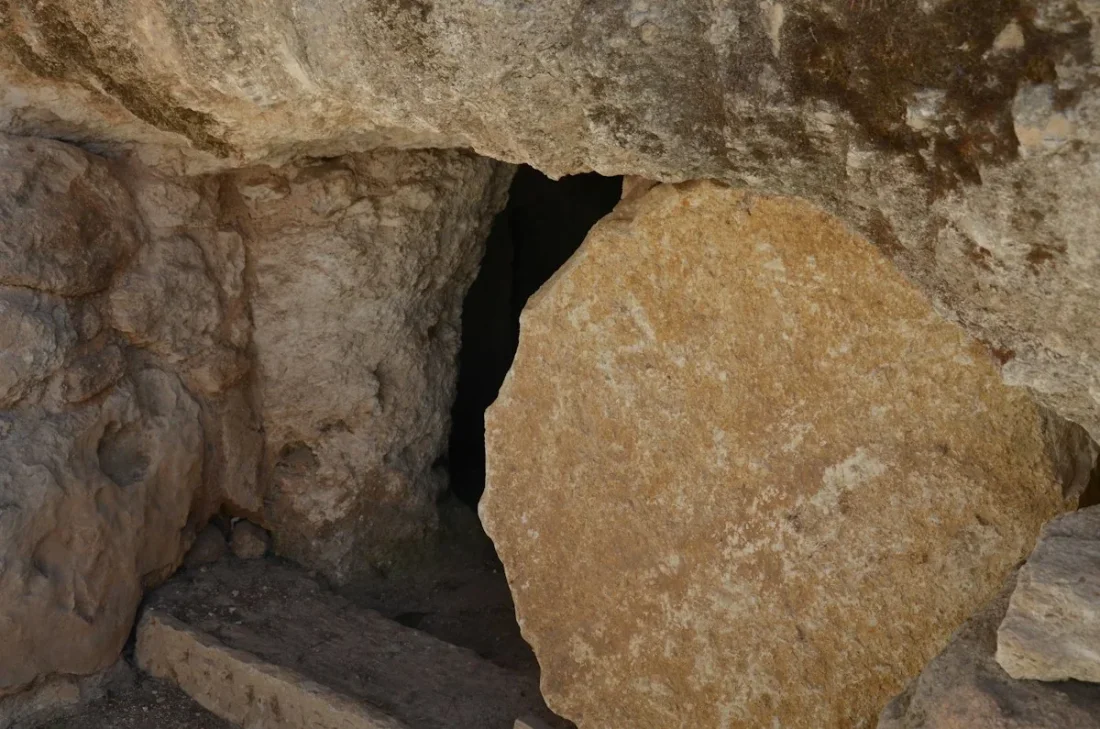
Sometimes the answer comes after you have stopped expecting one. That is where Jesus raises Lazarus after four days, when Lazarus of Bethany, a close friend of Jesus and the brother of Martha and Mary, had already been buried. I want you to see why this story matters when your own hope feels buried.
John 11 does not give you a soft story. It gives you grief, delay, tears, a sealed tomb, and a man who had been dead for four days. As you read it, Bible hope and healing resources can help you keep this story connected to the wider biblical message of trusting God in hard seasons.
Can I tell you something? Jesus did not arrive late because He had lost control. He waited, and His waiting became part of the miracle. That may challenge you, because I know how easily humans can confuse God’s silence with God’s absence.
Why Did Jesus Wait Four Days for Lazarus?
Jesus waited because the miracle would reveal God’s glory and strengthen faith in Christ. John says Jesus loved Lazarus, yet He stayed two more days after hearing the news. The delay was not neglect. It became the setting for a public sign that pointed people toward Jesus’ identity and divine authority.
The timing matters. Lazarus was not reported as missing, unconscious, or barely alive. Jesus later stated plainly that Lazarus had died, and John then says Jesus found him in the tomb four days later.
I see a hard lesson here. God can allow a situation to become worse before He reveals His power, and that does not mean He has stopped loving you.
When Jesus heard that, he said, This sickness is not unto death, but for the glory of God, that the Son of God might be glorified thereby.
(John 11:4, KJV).
The word translated “glory” points to God’s honor being displayed through what happens.
The miracle was never meant to make Lazarus famous. It was meant to make Jesus known.
Here is something I want you to notice. Jesus does not promise Martha that death will never happen. He teaches her that death itself cannot defeat Him.
What Happened Before Jesus Reached Bethany?
Before Jesus reached Bethany, Lazarus had become seriously ill, his sisters had sent word, and Jesus deliberately remained where He was for two more days. Bethany was near Jerusalem, making the public setting significant. By Jesus’ arrival, Lazarus had been in the tomb four days, and many mourners were present.
Bethany was a village about two miles from Jerusalem. The crowd around Martha and Mary meant many people could witness what happened next. John presents the miracle as a sign with many witnesses rather than a hidden private event.
I cannot deny how powerful that detail is. Jesus could have healed Lazarus before death, but He chose a setting where nobody could easily explain the outcome as an ordinary recovery.
Martha went to meet Jesus with pain in her voice. You can almost hear the question behind her words: “Why didn’t You come sooner?”
Her faith was wounded, but it was not dead.
Jesus said unto her, I am the resurrection, and the life: he that believeth on me, though he die, yet shall he live:
And whosoever liveth and believeth in me shall never die. Believest thou this?
(John 11:25-26, KJV).
Jesus moved Martha beyond what she expected. She knew about resurrection at the last day. Jesus showed her that resurrection is centered in His own person.
What Did Jesus Mean by Resurrection and Life?
Jesus meant that resurrection is not merely an event that happens someday. He identified Himself as “the resurrection, and the life,” presenting Himself as the source and authority of life for those who believe. The Greek word anastasis refers to rising or being raised, while zoe means life.
That changes the question. You are not being asked to trust a vague force called hope. You are being called to trust Jesus Christ Himself.
I believe there is a deeper lesson here. Biblical hope is not positive thinking with religious language attached to it. Christian hope rests on God’s character, Christ’s authority, and the promise of resurrection.
The world often defines hope as wanting something good to happen. Scripture goes deeper. You can hope because Jesus remains who He is when your circumstances collapse.
This is where I want you to get serious. You may have a dream that failed, a relationship that ended, a prayer that appears unanswered, or a door that refuses to open. Christ still stands outside the tomb.
Why Did Jesus Weep Before Raising Lazarus?
Jesus wept because He entered the grief surrounding Lazarus and faced the pain that death had caused. John records His tears before the miracle, showing that divine power does not erase compassion. Jesus could know what He was about to do and still weep with those who mourned.
You do not need to pretend that faith removes sadness. Martha grieved. Mary grieved. Their friends grieved. Jesus stood among them.
Jesus wept.
(John 11:35, KJV).
I want you to hear this clearly. Tears are not proof that faith has failed. Sometimes tears are the honest response of a heart that understands how painful death and loss can be.
The crowd noticed His love for Lazarus. Others asked why Jesus had not prevented the death if He could open blind eyes.
That question still appears today. You may ask it with different words, but the wound is familiar.
“Lord, why did You let this happen?”
Jesus does not answer every question with an explanation. He answers Martha by revealing Himself.
That is something special.
How Did Jesus Call Lazarus Out of the Tomb?
Jesus called Lazarus from the tomb with a loud command, and Lazarus came out still wearing his burial coverings. John presents the command as simple and direct. The miracle shows Christ exercising authority over death itself, not through a ritual, object, or human technique.
The command matters because Jesus did not perform a complicated ceremony. He spoke. Lazarus heard. Lazarus came out.
And when he thus had spoken, he cried with a loud voice, Lazarus, come forth.
(John 11:43, KJV).
The ASV keeps the same force of the scene.
And when he had thus spoken, he cried with a loud voice, Lazarus, come forth.
(John 11:43, ASV).
And the World English Bible gives the command in plain language.
When he had said this, he cried with a loud voice, “Lazarus, come out!”
(John 11:43, WEB).
I see something many people miss. Jesus did not address “death” as an abstract idea. He called Lazarus by name.
You are not invisible to Christ.
He knows names. He knows stories. He knows wounds. He knows what you cannot explain.
The burial cloths add another striking detail. Lazarus did not walk out looking untouched by death. He came out still wrapped, and Jesus then instructed others to remove the grave clothes.
That picture speaks loudly. Jesus gave Lazarus life, while the people around him helped remove what still clung to him.
Sometimes God gives you a new beginning, but you still need to let go of the old chains.
The Four-Day Wait Was Part of the Sign
The four days made the situation unmistakable within the story. Martha warned that there was already a stench, while John clearly says Lazarus had been in the tomb four days. The narrative stresses the reality of death before displaying Christ’s power over it.
This point matters because people sometimes soften biblical miracles until they become harmless stories. John does the opposite. He keeps pressing the reader toward the reality of death.
Jesus said, “Take away the stone.” Martha, the sister of him who was dead, said to him, “Lord, by this time there is a stench, for he has been dead four days.”
(John 11:39, WEB).
Ancient Jewish burial practices involved prompt burial, and Jewish counting could treat partial days as full days. John does not invite you to calculate the miracle away. His emphasis remains clear: Lazarus had been buried for four days when Jesus arrived.
Some later Jewish traditions connected the fourth day with the point when decomposition made death unmistakable, but that specific belief is extra-biblical and should not be presented as a direct teaching of Scripture.
I think that distinction matters. You should build your faith on what Scripture says, not on traditions that later grew around the text.
Death Was Real, Yet Jesus Remained Lord
Jesus raises Lazarus after four days because death does not set the final boundary on His authority. John shows Christ standing before a sealed tomb, surrounded by grieving people, and commanding life to return. The miracle points to Jesus as the Son of God and strengthens belief in Him.
Look at the movement in the chapter. Sickness comes. Death follows. Grief fills the home. The tomb becomes the symbol of finality.
Then Jesus arrives.
You can see why the story has endured for generations. It speaks to the deepest human fear with a direct answer: Christ is Lord over death.
I want you to notice another detail. Jesus did not raise Lazarus because Lazarus had earned it.
Grace is God’s undeserved favor.
That matters because salvation itself is never a reward for human performance. The Lazarus story points your attention away from human ability and toward divine authority.
The raising of Lazarus also happened close to Jerusalem, where opposition to Jesus would intensify. John later records that the religious leaders discussed killing Jesus after many people began believing in Him because of the sign.
The miracle moved the story toward the cross.
That is sobering.
What Does Lazarus Teach Us About Hope?
Lazarus story teaches you that hope is rooted in Christ, not in a favorable timeline. Martha believed Jesus could have prevented the death, but Jesus called her to trust Him beyond that loss. I see the lesson clearly: faith must rest on who Christ is, even when the answer arrives later than expected.
You may feel like your “fourth day” has arrived. The thing you prayed about may look finished. The future may look sealed.
But your situation does not become your God.
I am not telling you that every earthly loss will be reversed in the way Lazarus’s death was reversed. Scripture does not promise that every believer receives the same visible miracle. The Christian promise reaches deeper than that.
Jesus promises resurrection life.
That is why the story matters beyond one family in Bethany.
I would encourage you to stop measuring God’s faithfulness by the clock. Martha wanted Jesus earlier. Jesus gave her something greater than the timing she expected.
Here’s the bottom line: delay does not prove abandonment.
Jesus said unto her, I am the resurrection, and the life.
(John 11:25, KJV).
You can trust the One who stands beside the tomb.
You can pray again.
You can believe again.
You can keep walking.
And you can remember that biblical hope has a Person at its center.
Let Your Faith Meet Jesus at the Tomb
I began this article with the pain of waiting. Lazarus shows you why waiting can feel brutal, especially when the answer seems to come after the situation has already died. Yet I also see why John recorded the four days so clearly: Jesus was not defeated by the tomb.
Maybe you are standing beside a tomb of your own. Your “tomb” may represent a dream, a relationship, a ministry, a family burden, or a season that feels finished. I want you to bring that pain honestly to Christ instead of hiding behind religious words.
You should also remember Peter, another follower of Jesus who faced an impossible situation when he was imprisoned under Herod. His story shows a different kind of deliverance, and my article titled “Peter Was Miraculously Freed From Prison: God Still Opens Closed Doors” gives that account more fully.
The situations were different. The God who acted was the same.
I cannot tell you exactly how God will answer your prayer. I can tell you what John 11 places before you: Jesus Christ is the resurrection and the life.
So stop calling your story finished while Christ is still Lord.
Pray. Trust. Hold on.
And when you have raw thoughts about your own “fourth day,” leave them in the comments. Someone reading your words may be carrying a burden you cannot see, and your honest testimony may give them courage to keep believing.
Before you go, continue with The Life-Changing Message of Hope: Unlock Divine Miracles.