Daniel survives the lions’ den because he refused to let fear become his master. I believe there is a deeper lesson here. Daniel did not wait for trouble before trusting God. He built a life of prayer first, then stood firm when his prayer life became dangerous. You can explore more Bible teachings about Christian faith as you learn why his courage still speaks to believers today.
I can honestly say this story hits hard because the real battle started before Daniel saw a single lion. His enemies watched his habits, found no corruption in his work, and attacked the one thing they knew he would never abandon. Daniel survives the lions’ den because his faith was settled before the crisis arrived.
Why Did Daniel Keep Praying to God?
Daniel kept praying because his relationship with God mattered more than the king’s command.
Prayer was not Daniel’s emergency plan; it was his daily habit.
He knew the law could threaten his life, yet he would not hide his devotion. His faith had already settled the question before the danger arrived.
Daniel 6 says Daniel knew the written decree had been signed. Still, he went home, opened his windows toward Jerusalem, and prayed three times that day as he had done before. That detail matters. He did not suddenly become brave because danger appeared.
“Now when Daniel knew that the writing was signed, he went into his house; and his windows being open in his chamber toward Jerusalem, he kneeled upon his knees three times a day, and prayed.”
(Daniel 6:10, KJV)
I see a powerful habit here:
Daniel did not hide because people were watching. You will never build strong faith through occasional panic prayers. You build it through daily fellowship with God.
Daniel’s prayer faced Jerusalem, which reflected the ancient hope connected to God’s covenant and the holy city. His body stayed in a foreign empire, but his heart still pointed toward God. You can live in a hostile setting without letting that setting decide who you worship.
What Made Daniel Refuse the King’s Law?
Daniel refused the king’s law because it demanded what belonged to God alone. The decree told him to stop praying for thirty days, but Daniel would not trade worship for safety. He obeyed human authority where he could, yet he rejected any command that forced him to deny God.
King Darius signed a temporary decree that elevated the king above prayer for thirty days. The satraps used flattery and political pressure to trap Daniel. They knew his character made him hard to attack, so they targeted his faith.
Daniel did not stage a protest. He did not shout in the streets. He prayed as usual.
That may surprise you.
“We ought to obey God rather than men.”
(Acts 5:29, KJV)
This principle appears clearly in Scripture. Human authority has a real place, but worship belongs to God. Daniel shows what faithful obedience looks like when a command crosses that line.
The Aramaic language of Daniel 6 also adds an interesting detail. The word used for the lions’ den points to a pit or enclosed place, which fits the scene as a controlled royal punishment rather than a simple wilderness encounter. Daniel was trapped by law, sealed inside, and left under the power of the king’s animals.
How Did God Protect Daniel from Lions?
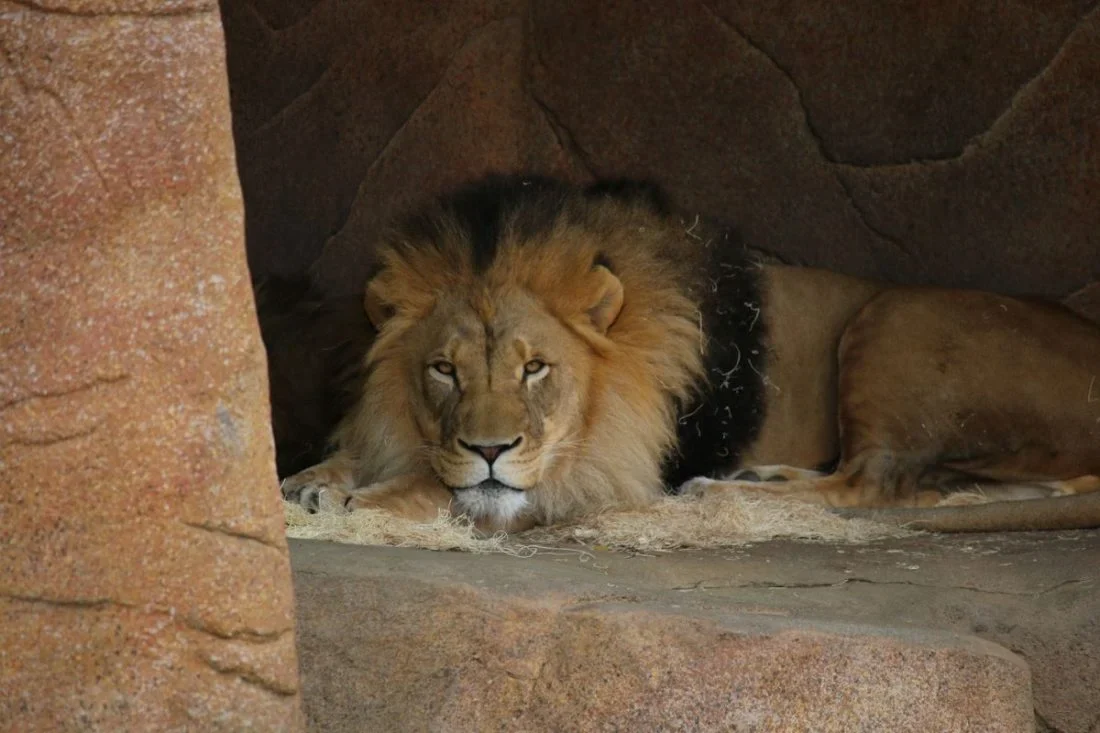
God protected Daniel by shutting the lions’ mouths through His angel. Daniel entered the den alive, remained unharmed through the night, and came out when the king called him.
The miracle did not erase the threat. It showed that God’s authority was greater than the lions waiting inside that den.
The king spent a miserable night. Daniel had no such comfort from human power, but God was with him.
“My God hath sent his angel, and hath shut the lions’ mouths, that they have not hurt me.”
(Daniel 6:22, ASV)
I love the simplicity of Daniel’s testimony. He did not credit luck. He did not praise the king. He pointed straight to God.
That is where Daniel survives the lions’ den in a way that goes deeper than physical rescue. God proved that the ruler of Persia was not the highest ruler in the story.
You may face a situation where you cannot change the environment. You can still trust the God who rules inside it.
Here’s the bottom line: God does not need favorable conditions to protect His people.
The king discovered this too. His authority could write the law, but it could not control the outcome. The stone could seal Daniel inside. It could not seal God outside.
Why Did God Allow Daniel to Face Lions?
God allowed Daniel to face the lions without promising him an easy escape beforehand. The trial exposed Daniel’s steady trust and displayed God’s power before a pagan court.
Daniel’s danger became a witness. His suffering did not mean God had abandoned him; it became the setting where God answered with POWER and MIRACLE.
I want you to notice something. Scripture never says Daniel received a private promise that the lions would not harm him. He knew the danger was real.
That makes his faith stronger, not weaker.
Daniel 6 also fits a larger biblical pattern. God sometimes allows His servants to enter severe trials while remaining completely sovereign over the result. Job faced loss. Joseph endured prison. The three Hebrews entered the furnace.
That is why this story connects naturally with “What the Fiery Furnace Teaches Us About Faith“. That article shows how Shadrach, Meshach, and Abednego trusted God without demanding a certain outcome.
Daniel’s story carries the same hard truth:
Faith does not mean you control what happens next. Faith means you know whom you will trust when the answer is unknown.
You may pray for deliverance today. God may answer quickly. He may carry you through a long trial first. Neither response changes His authority.
How Can You Keep Faith Under Pressure?
You can keep faith under pressure by making obedience stronger than fear. Pray before trouble comes, decide what you believe, refuse sinful compromise, and trust God with the result. Daniel did not control the king, the law, or the lions. He controlled his response and stayed faithful to God.
I want you to picture the moment Daniel heard the decree. He already knew the penalty. He also knew his habit of prayer could expose him.
What would you do?
I believe this teaches us that courage grows from repeated obedience. You do not build courage in one dramatic moment. You practice faith in ordinary moments until pressure reveals what is already inside you.
Daniel had integrity at work before he had courage in the den. His enemies searched for corruption and found none. His private life matched his public confession.
You can apply that today.
Pray when nobody sees you.
Speak truth when lying feels easier.
Refuse compromise when approval is offered.
Keep trusting God when answers seem slow.
🛑 Key truth: Your strongest defense in a crisis is often the faith you built before the crisis began.
Daniel’s Integrity Made Him a Target
Daniel’s integrity made him a target because his enemies could not find a legitimate fault in his work. They had to attack his devotion to God. His clean character did not keep him from trouble, but it gave him nothing to hide when trouble came.
That detail destroys a popular myth. Faithfulness does not guarantee a trouble-free life.
Daniel was respected because he was trustworthy. That respect created jealousy. His enemies did not want Daniel removed because he was lazy or dishonest. They wanted him gone because his character stood in their way.
You may face something similar. Doing what is right can cost you.
I see something many people miss here. Daniel’s faith was not careless. He served faithfully inside a government system. He accepted responsibility. He worked with excellence. Then he drew a firm line when worship was threatened.
That balance matters. Christian courage is not reckless behavior. It is steady obedience.
Daniel’s Faith Was Public and Personal
Daniel’s faith was public and personal because his prayer life shaped his public character. He did not perform faith for attention, yet people could see its effects. His conduct, prayer, courage, and trust all pointed in the same direction. His testimony became powerful because his faith was genuine before anyone applauded it.
Daniel’s story reached a pagan king and an entire political structure. Darius eventually declared the greatness of Daniel’s God.
“For he is the living God, and steadfast for ever, and his kingdom that which shall not be destroyed, and his dominion shall be even unto the end.”
(Daniel 6:26, KJV)
Now let me tell you this. Your faith can speak without a stage.
Your patience can speak. Your refusal to lie can speak. Your forgiveness can speak. Your prayer during pain can speak.
Daniel survives the lions’ den, yet the larger victory is that a king saw evidence of the living God.
That is a serious challenge. You may be the only Christian someone watches closely at work, in your family, or among your friends. Your choices may say more than your words.
The God Who Closed the Lions’ Mouths
Darius could issue commands, summon officials, and seal the den, but he could not control the God of Daniel. The miracle revealed divine authority in a place where human authority had reached its limit.
The morning after the trial brought one of the strongest moments in Daniel 6. Darius hurried to the den and cried out for Daniel.
Daniel answered.
He was alive.
“So Daniel was taken up out of the den, and no manner of hurt was found upon him, because he trusted in his God.”
(Daniel 6:23, WEB)
There it is.
Because he trusted his God.
I believe that sentence reaches beyond one ancient event. Daniel did not trust God because the lions were harmless. He trusted God while the lions were waiting.
That difference matters in your life.
You can trust God before the door opens. You can trust Him while the problem grows. You can trust Him when the answer comes. Daniel’s faith was anchored in God’s character, not in a guaranteed schedule.
Your Faith Must Survive the Pressure
Your faith must survive the pressure because pressure reveals what controls your heart. Daniel lost the comfort of safety, but he refused to lose his obedience. The trial exposed his priorities, strengthened his witness, and showed everyone that devotion to God was worth more than temporary protection.
I want you to ask yourself something uncomfortable.
What would make you stop praying?
Fear? Money? Rejection? A relationship? Career pressure?
Daniel had something greater to lose than comfort. He could lose his life. Still, he kept praying.
This is where Daniel survives the lions’ den as a personal challenge for you. You may never face a royal decree, but you may face pressure to stay silent about Christ.
Do not let fear write your theology.
Do not let culture decide your worship.
Do not let comfort become your god.
Here’s something I had to learn the hard way: faith becomes visible when obedience costs something.
Stand Firm When Fear Wants You Silent
Daniel’s example teaches that prayer builds courage, integrity protects your witness, and trust keeps fear from ruling your choices. Daniel entered a sealed den because he would not abandon God. He came out alive because God showed that no king, law, or beast can defeat His sovereign purpose.
I can picture Daniel walking away from that den. The lions were real. The danger was real. The God who stood with him was more real.
Maybe you are facing your own den now.
Do not bow to fear. Keep praying. Keep obeying. Keep trusting Christ.
Your story may become the reason someone else decides to stand. For more guidance as you grow in faith, explore these Christian spiritual growth teachings.
Leave your raw thoughts in the comments. Tell someone what pressure you are facing and where you are choosing to trust God today.
Then keep building that courage by reading “Claim Your Mountain: A Journey to a Courageous Faith“.