Have you ever stopped to ponder why God chose those ten specific judgments to shatter Pharaoh’s pride and break the bonds of Israelite slavery? I’m telling you, these devastating occurrences in ancient Egypt were not random displays of raw power or mere environmental oddities. The significance of the ten plagues lies in God’s systematically dismantling the pantheon of Egyptian deities while revealing His absolute sovereignty over all creation.
Can I tell you something that changed how I read the Book of Exodus? When we explore these bible facts, we discover that each supernatural judgment directly targeted a specific false god worshipped in ancient Egyptian culture. Let me make this clear right from the start.
“Against all the gods of Egypt I will execute judgment: I am the Lord.” (Exodus 12:12, NKJV)
You might be surprised by this, but God specifically declared His theological warfare long before the final boundary line was crossed. I find this deeply encouraging because it proves our God remains supreme over every earthly force, ancient or modern.
Nile turned to blood systematically exposed Hapi, the sacred river god, as powerless.
Swarms of frogs humiliated Heqet, the frog-headed deity of fertility and creation.
Thickets of dense darkness mocked Ra, the supreme sun god of Egypt.
What Is the Significance of the Ten Plagues in Egypt?
The significance of the ten plagues is God’s direct theological judgment against Egypt’s false idols, systematically proving His absolute authority over nature, life, and Pharaoh while executing divine redemption for the enslaved Israelites.
I couldn’t shake that thought when I first began analyzing the opening sequence of warnings. The initial judgment transformed the essential Nile River into a stagnant flow of absolute death and rotting stench. I can picture it clearly as Hapi, the revered river deity, stood utterly defeated before Jehovah’s outstretched staff.
“And the fish that were in the river died, the river stank, and the Egyptians could not drink the water of the river. So there was blood throughout all the land of Egypt.” (Exodus 7:21, NKJV)
Okay, stay with me here because the pattern gets even more intense as the narrative unfolds. God proceeded to send swarms of frogs across the land, directly targeting Heqet, the goddess associated with childbearing and fertility. The Egyptians considered frogs sacred creatures that could never be deliberately harmed, yet suddenly they were stepping on them in their own bedrooms.
- Systematic dismantling of false worship
- Public humiliation of pagan deities
- Unmistakable proof of divine sovereignty
I want you to notice something crucial about how Pharaoh reacted during these early signs. He repeatedly hardened his heart, stubbornly refusing to bow before the Creator of heaven and earth.
Why Did God Target Egyptian Deities During Exodus?
God targeted Egyptian deities during the Exodus to systematically dismantle the nation’s spiritual strongholds, demonstrating that pagan idols possess zero power when confronted by the true Creator and sovereign Lord.
I have spent a lot of time thinking about this specific aspect of biblical history. Pharaoh was not merely an earthly monarch; the Egyptians worshiped their ruler as a living god, the human embodiment of Horus and the son of Ra. By striking Egypt’s livestock, crops, health, and skies, God exposed the complete helplessness of Egypt’s entire religious system.
I want to draw your attention to this key concept of theomachy, which means a direct divine war against false gods. The world sees pagan idols as harmless cultural artifacts, but God defines them as deceptive spiritual counterfeits that trap human souls in darkness. Renowned biblical scholar A.W. Pink noted how God’s judgments always expose the total vanity of human pride and idolatrous trust.
Plague of Lice: Confounded the Egyptian magicians who admitted, “This is the finger of God.”
Plague of Flies: Severed Goshen from Egypt, protecting God’s chosen people.
Plague of Livestock: Slain bulls and cattle exposed Apis and Hathor as powerless images.
Here’s something I had to learn the hard way through my own study of scripture. God will never share His glory with manufactured idols or arrogant human rulers.
“I am the Lord, that is My name; and My glory I will not give to another, nor My praise to carved images.” (Isaiah 42:8, NKJV)
I understand how difficult this can be to process when viewing judgment from a strictly modern viewpoint. Yet, this holy disruption was entirely necessary to liberate a whole nation from centuries of brutal oppression.
How Did the Ten Plagues Demonstrate God’s Power?
The ten plagues demonstrated God’s power by altering natural laws, establishing precise boundaries between believers and non-believers, and executing flawless divine timing that no human magician could ever duplicate or withstand.
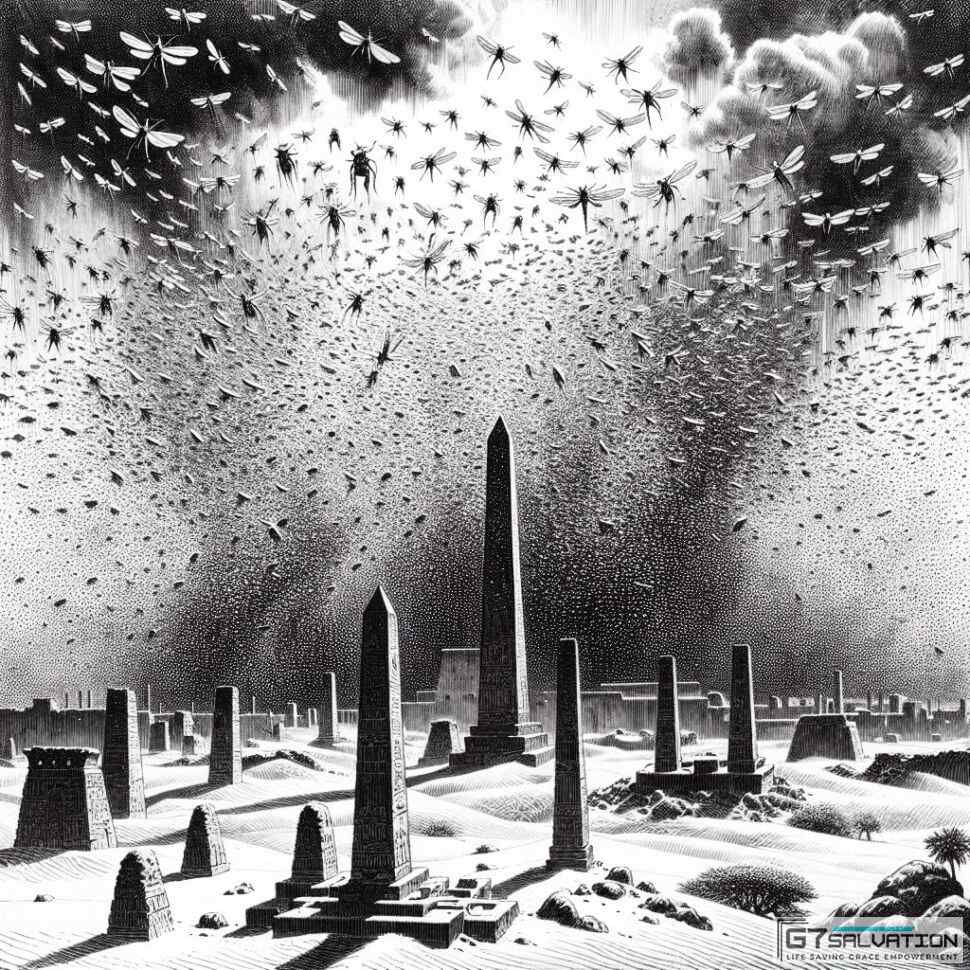
I see something many people miss when reading through the middle series of plagues. Notice how God clearly distinguished between the Egyptians and the Israelites living in the nearby land of Goshen. Boil-producing dust, ruinous hail, and devastating locusts struck Pharaoh’s domain while leaving God’s people completely untouched.
- Purity of Goshen: No swarms or hail crossed the border into Israelite homes.
- Medical Defeat: The magicians could not stand before Moses because of the painful boils.
- Absolute Control: Locusts consumed every remaining green tree across the Egyptian countryside.
I’ll be honest with you, that distinction blew me away when I first realized its spiritual implications. It proved beyond any shadow of a doubt that these events were not accidental weather anomalies or natural environmental disasters.
“And I will make a difference between My people and your people. Tomorrow this sign shall be.” (Exodus 8:23, NKJV)
I truly believe that God still sets a clear boundary around those who belong to Him today. But I started seeing something I had missed regarding the spiritual hardness of Pharaoh’s stubborn heart.
| Judgment Phase | Targeted Egyptian Deity | Spiritual Significance |
| Darkness | Ra (Sun God) | Total blackness exposed the supreme god of Egypt as completely powerless. |
| Boils | Sekhmet (Goddess of Healing) | Medicine priests were infected and unable to heal themselves or others. |
| Death of Firstborn | Pharaoh / Anubis | Divine authority proved that God alone holds the power over life and death. |
You know what I realized? When a heart continually resists divine truth, each successive warning only hardens it further until destruction becomes totally inevitable.
What Is the Theological Impact of the Final Plague?
The theological impact of the final plague is the institution of the Passover, foreshadowing Jesus Christ’s ultimate substitutionary sacrifice through the protective blood of an immaculate lamb painted upon doorposts.
I can’t lie, that final night in Egypt gives me chills every time I picture the scene. The tenth plague brought the death of all firstborn sons throughout the land, striking directly at Pharaoh’s legacy and the god Osiris.
“For the Lord will pass through to strike the Egyptians; and when He sees the blood on the lintel and on the two doorposts, the Lord will pass over the door, and not allow the destroyer to come into your houses to strike you.” (Exodus 12:23, NKJV)
I want you to think about that profound image for just a moment. The Israelites were spared strictly because of the sacrificial blood applied to their wooden doorframes in faith.
- Unblemished lamb slain for each household
- Blood applied to side posts and upper lintel
- Complete safety provided inside the blood-marked house
I am fully convinced that this dramatic event served as the ultimate prophetic template for the Gospel of Jesus Christ. The New Testament clearly reveals that Christ is our true Passover Lamb, slain to deliver us from eternal judgment.
What Spiritual Lessons Can We Learn Today?
We learn that God calls us to abandon modern idolatry, trust His ultimate deliverance during trials, and recognize His patient warnings before final judgment arrives upon an unrepentant world.
I believe this teaches us that God’s warnings always precede His ultimate judgments. He gave Pharaoh nine distinct opportunities to repent before the final catastrophic night arrived.
“The Lord is not slack concerning His promise, as some count slackness, but is longsuffering toward us, not willing that any should perish but that all should come to repentance.” (2 Peter 3:9, NKJV)
I would encourage you to examine your own heart today and see what subtle idols might be taking root. The world tells us to trust in wealth, status, and personal self-sufficiency, but God defines true security as absolute surrender to His holy divine will.
Reject the world’s false gods of money and vanity.
Apply the protective blood of Jesus Christ to your life daily.
I have no doubt that the lessons of Exodus are just as urgent right now as they were thousands of years ago in the desert. As we grow deeper in our understanding of core biblical teachings, we see that God’s power always secures victory for His faithful people.
Now let me tell you this final truth before we wrap up our study. What raw thoughts, reflections, or burning questions popped up in your mind while exploring this powerful story? I want you to share your heartfelt perspectives in the comments section below and join this vital spiritual conversation right now!